
The humble ant, often overlooked as it scurries across pavements and garden paths, harbours one of nature's most astonishing secrets. These diminutive creatures, weighing mere fractions of a gram, possess a strength and resilience that has captivated scientists and storytellers alike. From their intricate social structures to their capacity to lift objects many times their own body weight, ants challenge our perceptions of power and size. This exploration delves into the precise measurements of ant mass across species and castes, unpacks the biological marvels that enable their feats, and examines why popular culture continues to lionise these tiny titans as symbols of tenacity and collective achievement.
- Ant weights vary significantly across more than twelve thousand species, ranging from approximately one milligram to ten milligrams depending on their environment and diet.
- Within a single colony, weight is determined by caste, with worker ants being the smallest, males occupying a middle range, and queens being the heaviest to support reproduction.
- The impressive strength of ants is supported by a rigid chitinous exoskeleton that provides structural protection and serves as an anchor for powerful, efficient muscles.
- Ants possess a low center of gravity and specialized leg pads that allow them to maintain stability and grip while carrying objects many times their own body weight.
- The diverse body sizes and roles within an ant colony reflect a highly evolved biological strategy that ensures the community operates with maximum efficiency.
- Ants are celebrated in popular culture as symbols of tenacity and collective achievement due to their unique physical adaptations and intricate social structures.
Understanding ant weight across different species and castes
Average weight variations among common ant species
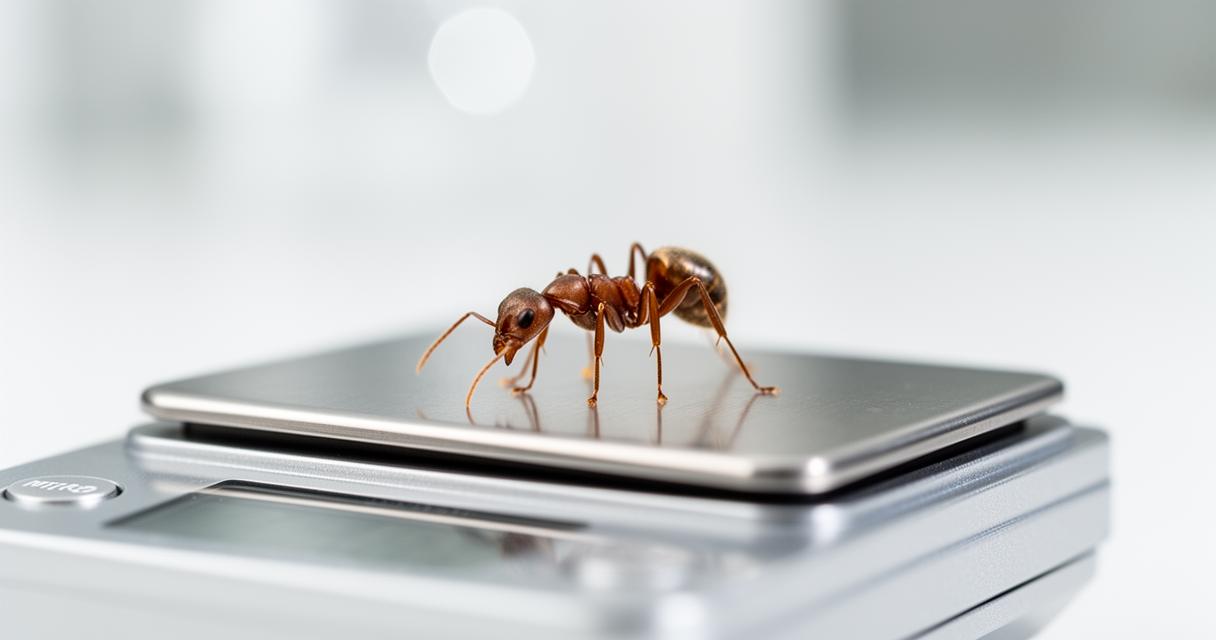
When contemplating how much an ant weighs in grams, one quickly discovers that the answer is far from uniform. The sheer diversity of the ant family, which encompasses more than twelve thousand known species, results in a remarkable spectrum of body masses. At the lighter end of the scale, some of the smallest worker ants, such as those belonging to certain Pharaoh ant colonies, tip the scales at approximately one milligram, or 0.001 grams. These delicate insects are so light that a gentle breeze might alter their course as they navigate their environment. In contrast, larger species such as the carpenter ant or the bulldog ant can weigh significantly more, with workers reaching weights between five and ten milligrams. The variations are driven by environmental pressures, dietary availability, and the ecological niches that each species has evolved to occupy over millions of years.
Beyond the differences between species, the geographical distribution of ant populations further influences their mass. Ants inhabiting temperate regions may develop slightly bulkier physiques to withstand colder climates, whilst those thriving in tropical zones often remain smaller and more streamlined to cope with heat and humidity. This adaptability underscores the evolutionary ingenuity of ants, allowing them to flourish in virtually every terrestrial habitat on Earth. The weight of an ant, therefore, serves as a fascinating window into the ecological and evolutionary forces that have shaped these insects over countless generations.
How Worker, Queen, and Male Ants Differ in Mass
Within a single colony, the weight of individual ants varies dramatically depending on their caste and role. Worker ants, the backbone of any colony, are typically the smallest members, with their mass reflecting the demands of foraging, nest maintenance, and brood care. These industrious females often weigh between one and five milligrams, a size that facilitates nimble movement through narrow tunnels and swift navigation of the terrain in search of sustenance. Their compact form is a testament to the efficiency required for tasks that sustain the entire community.
Queens, by contrast, are the heavyweights of the colony. Charged with the singular responsibility of reproduction, a queen ant can weigh anywhere from ten to fifty milligrams, and in some species, even more. Her larger size is necessary to accommodate the considerable energy reserves and physiological structures needed to produce thousands, sometimes millions, of offspring during her lifetime. The queen's abdomen, in particular, expands significantly as she matures, making her one of the most visually distinctive members of the colony. Male ants, or drones, occupy a middle ground in terms of weight. Their primary function is to mate with virgin queens, and once this task is complete, they typically perish. Males generally weigh more than workers but less than queens, reflecting their transient yet vital role in the colony's reproductive cycle.
This caste-based differentiation in mass is not merely a matter of size but a finely tuned biological strategy. Each member of the colony is optimised for its specific duties, ensuring that the collective operates with maximum efficiency. The variation in weight among workers, queens, and males illustrates the intricate social organisation that has enabled ants to become one of the most successful groups of organisms on the planet.
The remarkable physical adaptations behind ant strength
Anatomical features enabling extraordinary lifting capacity
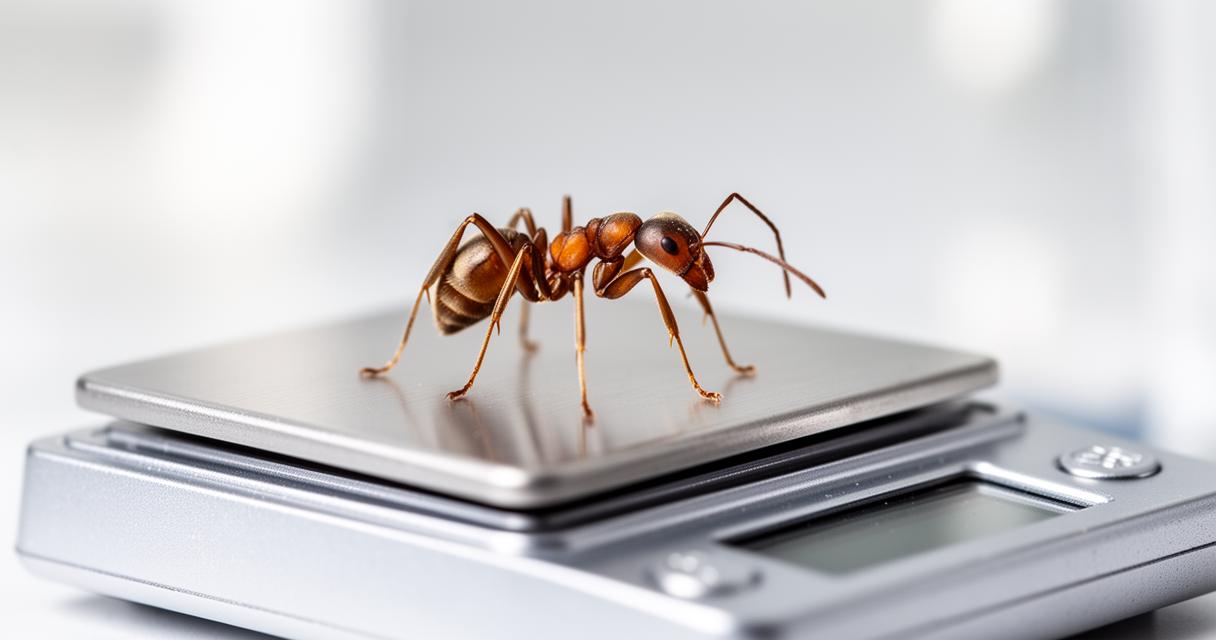
The question of how such minuscule creatures can lift and carry objects many times their own weight has long intrigued biologists. The answer lies in a suite of anatomical and biomechanical adaptations that work in concert to produce feats of strength disproportionate to their size. Chief among these is the ant's exoskeleton, a rigid yet lightweight structure composed of chitin. This external armour provides not only protection from predators and environmental hazards but also serves as an anchor point for powerful muscles. The muscles themselves are densely packed and operate with remarkable efficiency, generating force relative to body mass that far exceeds that of larger animals.
Moreover, the ant's centre of gravity is positioned low to the ground, which enhances stability and allows for the controlled manipulation of heavy loads. Their six legs, each equipped with specialised claws and adhesive pads, provide exceptional grip on a variety of surfaces, enabling ants to climb vertical walls and traverse inverted terrain with ease. The coordination of these appendages is orchestrated by a sophisticated nervous system that processes sensory information and motor commands with astonishing speed. This combination of structural rigidity, muscular power, and neural coordination transforms the ant into a biological machine capable of moving objects up to fifty times its own weight, a ratio that no human could ever hope to achieve.
How ants transport food and construct complex nest structures
The practical applications of these physical adaptations are evident in the daily activities of ant colonies. Foraging ants, upon discovering a food source, must often transport items that dwarf their own bodies back to the nest. Seeds, insect carcasses, and fragments of plant matter are all hauled with a tenacity that seems almost miraculous. Some species employ a technique known as cooperative transport, wherein multiple workers combine their efforts to move particularly unwieldy or heavy items. This collective strategy not only increases the total force applied but also demonstrates the ants' capacity for communication and coordination, as they adjust their positions and movements in real time to navigate obstacles.
Nest construction is another arena where the ant's strength and organisational prowess shine. Subterranean colonies require extensive excavation, with workers using their mandibles to cut through soil and their bodies to carry particles to the surface. The resulting structures can be vast and architecturally complex, featuring chambers for brood care, food storage, and waste disposal, all connected by a labyrinth of tunnels. Above-ground mounds, built by certain species, are equally impressive feats of engineering. These structures regulate temperature and humidity, creating a microenvironment that is conducive to the colony's survival. The ability to manipulate materials far heavier than themselves, combined with an innate sense of structural design, allows ants to create habitats that endure for years and support populations numbering in the millions.
Why pop culture embraces the ant's disproportionate power
Historical Survival Through Millions of Years of Evolution
Ants have walked the Earth for more than one hundred million years, persisting through mass extinctions, climatic upheavals, and the rise and fall of countless other species. This longevity is a testament to their adaptability and resilience, qualities that have not gone unnoticed by human observers. The ant's evolutionary success is rooted in its social behaviour, which predates even the age of the dinosaurs. By living and working in cooperative groups, ants have been able to exploit resources, defend territory, and reproduce more effectively than solitary insects. Their colonies function as superorganisms, where the collective takes precedence over the individual, a strategy that has proven remarkably effective across diverse ecosystems.
The fossil record reveals that ancient ants were not vastly different from their modern descendants, suggesting that their fundamental body plan and social structure have remained largely unchanged over geological time. This stability, coupled with their ability to thrive in environments ranging from rainforests to deserts, underscores the ant's status as one of nature's enduring champions. Human fascination with these creatures is thus not merely a matter of admiration for their strength but also a recognition of their profound evolutionary legacy. In a world where so many species have come and gone, the ant's persistence serves as a powerful reminder of the advantages conferred by cooperation, efficiency, and adaptability.
Cultural Fascination with the Ant's Size-to-Strength Ratio
In literature, film, and folklore, ants have long been emblematic of industriousness, unity, and improbable might. From Aesop's fables, where the ant is portrayed as a paragon of foresight and diligence, to modern animated features that anthropomorphise these insects as heroic protagonists, the ant's disproportionate power relative to its diminutive size has captured the human imagination. This cultural celebration is rooted in the stark contrast between what we see and what we know to be true. An ant, so small that it might be crushed underfoot without notice, is capable of hauling objects that would, in human terms, equate to lifting a car overhead. Such a reversal of expectations invites us to reconsider our assumptions about strength and capability.
Moreover, the ant's collective achievements resonate with human values of teamwork and perseverance. In an era where individual effort is often prized above all else, the ant colony offers an alternative model of success, one built on cooperation and shared purpose. This has made ants a popular motif in narratives that seek to inspire or instruct, from children's books to motivational speeches. The image of thousands of ants working in harmony to achieve a common goal mirrors ideals of community and mutual support that transcend species boundaries. Pop culture's enduring embrace of the ant is thus both a celebration of natural wonder and a reflection of our own aspirations, reminding us that true strength often lies not in size, but in unity and determination.
Comments are closed